
1. The Biomechanics of Movement: Walking vs. Stairs
The human knee is a biological masterpiece, acting as a sophisticated hinge that manages weight and absorbs impact. However, it operates under fluctuating mechanical pressures that vary with the angle of your stride.
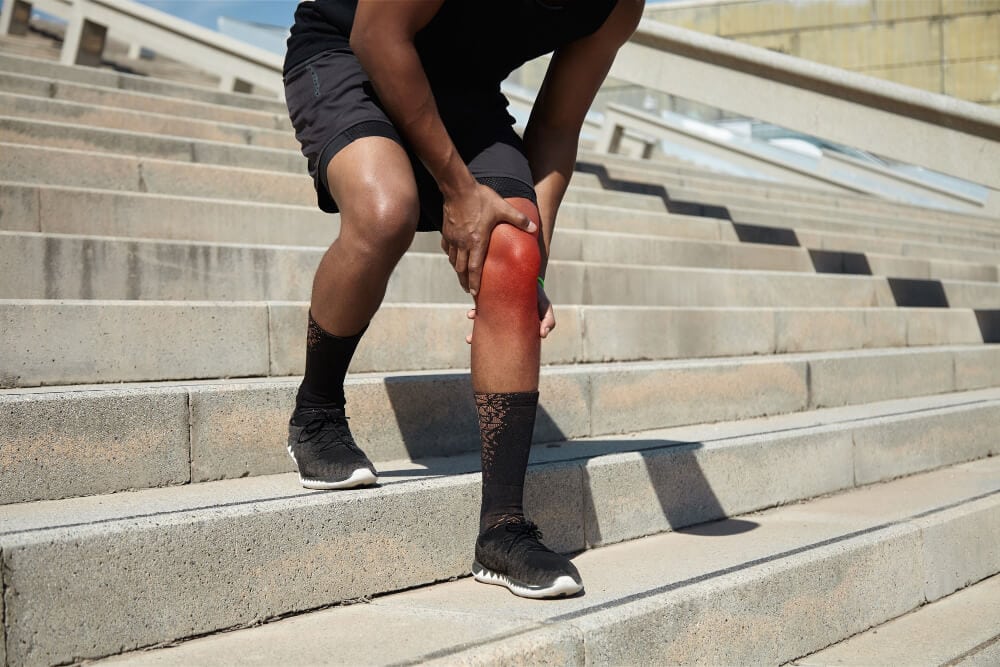
When you walk on level ground, your knees support roughly 1.5 to 3 times your body weight. The moment you step onto a staircase, this load factor intensifies. Research shows that ascending a flight of stairs forces the patellofemoral joint (the area where the kneecap meets the thigh bone) to endure a load equivalent to 7 to 8 times your body weight.
This explains why a joint that feels perfectly fine while you are resting can suddenly “protest” during an incline. Pain in this context is a biological alert; the cushioning tissues or structural alignment are struggling to manage that massive surge in pressure.
2. What Causes Pain in the Knee? (5 Primary Culprits)
When investigating what causes pain in the knee during stairs or walking, the issue typically stems from specific clinical triggers:
Patellofemoral Pain Syndrome (Runner’s Knee)
This is the most common cause of pain behind the kneecap. It happens when the patella does not track smoothly within its groove. Instead of gliding, it rubs against the bone, which irritates the surrounding soft tissues.
Osteoarthritis (OA)
This is a degenerative process in which the articular cartilage, the slippery buffer covering the bone ends, gradually thins out. Without this protection, bone-on-bone contact occurs, leading to “crepitus” (a grinding sensation) and stiff movement.
Meniscus Tears
The meniscus is a C-shaped shock absorber. A tear, whether from a sudden twist or age-related wear, can make the knee “catch” or feel locked. This often makes descending stairs feel incredibly unstable.
Patellar Tendinitis
Often called “Jumper’s Knee,” this condition involves an inflamed tendon which connects the kneecap to the shinbone. It creates a sharp ache just below the kneecap that intensifies when you push off a step.
Kinetic Chain Imbalance
Sometimes the knee is just the victim of poor support elsewhere. If your glutes are weak or your feet are flat, the knee is forced to cave inward. This creates chronic strain on the inner (medial) ligaments.
3. Clinical Symptoms & Red Flags
Your knee pain often has its own “language.” Beyond general discomfort, look for these specific indicators:
- Mechanical Catching: Clicking, popping, or a “grinding” feel during a stride.
- Instability: A sudden feeling that the knee might “give way” or buckle under weight.
- Nocturnal Aches: Pain that continues to throb even when you are lying still.
- Morning Stiffness: Difficulty fully straightening the leg after waking up.
4. The Diagnostic Roadmap
A professional evaluation by the best orthopaedic surgeon in Bangalore requires a systematic look at how your joint functions under pressure:
- Gait Analysis: Observing your movement patterns to find where you are overcompensating.
- Provocation Testing: Manual checks to verify the stability of your ligaments and the health of the meniscus.
- Imaging Protocols: We use diagnostic imaging to measure joint space and visualize soft tissue integrity, ensuring we don’t miss hidden tears or erosion.
5. Treatment Pathways: From Physical Therapy to Robotics
Conservative Management
Early-stage issues often resolve with a structured, non-invasive approach:
- Targeted Physiotherapy: Building up the quadriceps and hamstrings to act as a secondary shock absorber for the joint.
- Activity Modification: Swapping high-impact habits for low-impact options like swimming or cycling.
- Orthotic Support: Using specialized insoles to realign the foot and stabilize how the knee tracks.
Surgical Breakthroughs
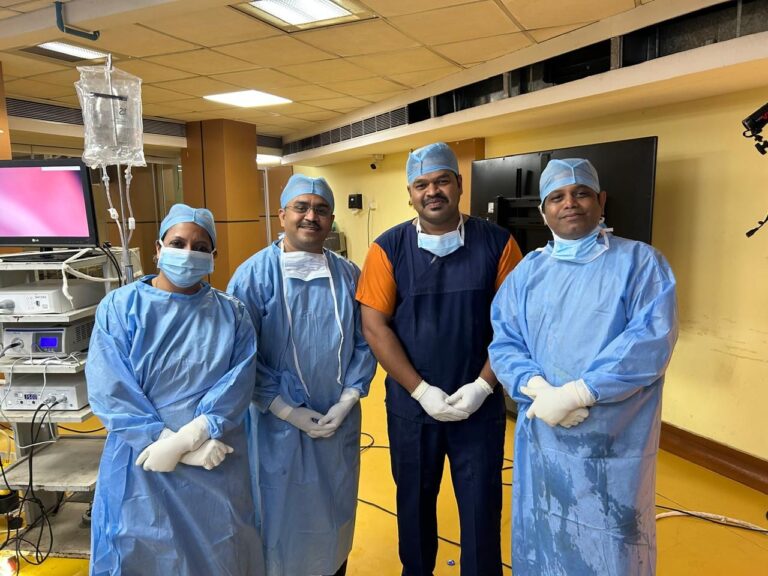
When joint erosion reaches a point where daily life is a struggle, we turn to structural restoration. Total knee replacement robotic surgery has fundamentally changed patient outcomes.
Using 3D mapping, the robotic system achieves sub-millimeter precision. This ensures the new joint is perfectly aligned with your unique anatomy, making it feel more “natural” and significantly cutting down the time it takes to get back on your feet.
6. How to Reduce Knee Pain While Walking: Expert Tips
Managing your joint health involves daily mechanical awareness:
- The Weight Multiplier: Even a small amount of weight loss can reduce the pressure on your knees by fourfold with every step you take.
- Footwear Logic: Avoid flat-soled shoes or heels for long distances. Choose footwear with arch support and shock-absorbing midsoles.
- The “Good Up” Rule: When climbing stairs, step up with your stronger leg first. When going down, lead with the painful leg to minimize the load on the sensitive joint.
- Strengthen the VMO: Exercises like “Straight Leg Raises” help build the inner quad muscle, which is essential for keeping the kneecap in its proper track.
7. Conclusion
Knee pain is a progressive issue; it rarely fixes itself without intervention. By addressing the mechanical hitches early, you can often stay clear of major surgery. However, for those with advanced damage, modern robotic precision has made joint replacement a reliable path back to a pain-free life.
To discuss personalized treatment options or learn more about robotic joint preservation, consult with Dr. Yogesh K, an expert in advanced orthopedic care.