
1. Defining the Partial Approach: How It Differs
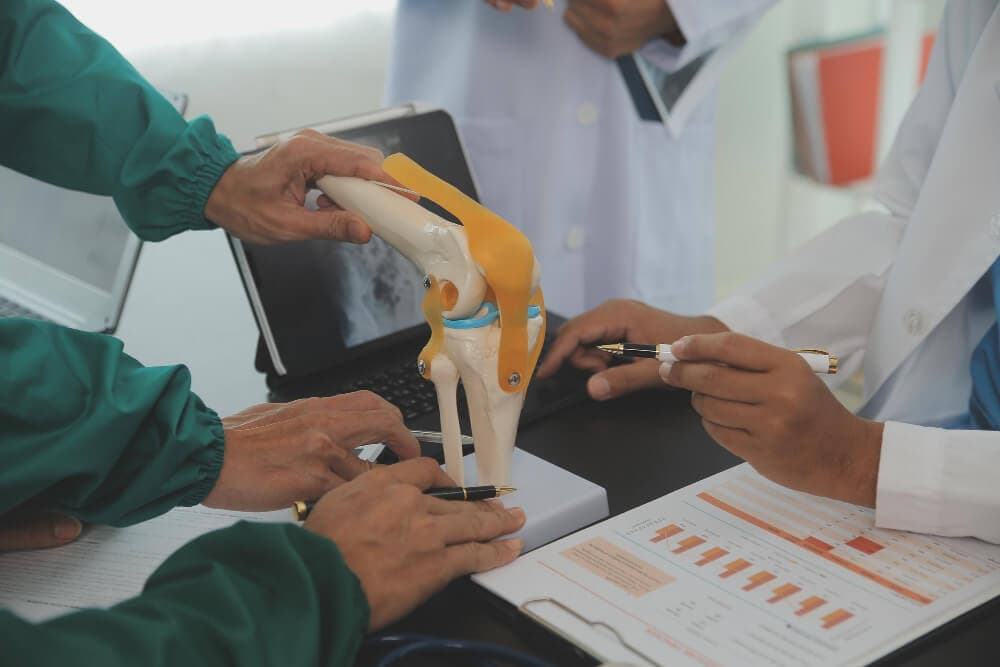
The human knee is divided into three main compartments: the medial (inner), lateral (outer), and patellofemoral (front). In many patients, particularly those with early-stage osteoarthritis, the wear and tear is localized to just one of these areas.
Unlike a traditional total replacement, where the entire joint surface is resurfaced, a partial knee replacement (unicompartmental knee arthroplasty) targets only the eroded section. It is a “joint-preserving” surgery. By keeping the healthy cartilage and bone in the other two compartments, the knee maintains its natural biomechanics. This is a fundamental shift from the “all or nothing” approach of the past.
2. Identifying the Ideal Candidate
Not every knee is a candidate for a partial fix. Success depends on the stability of the surrounding structures. An ideal candidate typically meets these clinical criteria:
- Localized Damage: Arthritis is strictly confined to one compartment (usually the medial side).
- Intact Ligaments: The Anterior Cruciate Ligament (ACL) must be healthy and stable to support the partial implant.
- Range of Motion: The patient should still have a decent degree of flexibility without significant joint deformity.
- Inflammatory Status: This procedure is best for osteoarthritis rather than systemic inflammatory conditions like rheumatoid arthritis, which tend to affect the whole joint.
A thorough diagnosis by a sports medicine orthopaedic surgeon is essential. We use weight-bearing X-rays and sometimes an MRI to confirm that the other parts of your knee are healthy enough to be left alone.
3. The Clinical Procedure: Targeted Restoration
The surgery is a refined process of “resurfacing” rather than “replacing.” Once the patient is under anesthesia, a small incision is made—significantly smaller than what is required for a Robotic Total knee replacement.
The procedure is limited to clearing out the worn-down tissue, sparing the vast majority of your healthy skeletal structure. Metal components are then fixed to the bone surfaces, with a medical-grade plastic spacer inserted between them. This creates a smooth, gliding surface that eliminates the bone-on-bone friction causing your pain.
4. Why Patients Choose Partial Over Total Replacement
The benefits of “going partial” are rooted in the preservation of your natural anatomy.
- The “Natural” Feel: Because the ACL and PCL (cruciate ligaments) are preserved, the knee retains its sensory feedback (proprioception). Patients often report that the knee feels like their own, rather than a mechanical substitute.
- Faster Recovery: The partial knee replacement surgery time is typically shorter, and because there is less bone work, the biological trauma is reduced.
- Minimal Blood Loss: Smaller incisions and less bone removal lead to a much lower risk of needing transfusions and less postoperative swelling.
- Superior Flexion: Patients usually achieve a greater range of motion and can bend their knees more deeply than those with total replacements.
5. The Recovery Roadmap: Timeline & Expectations
Recovery after a partial procedure is notably brisk. Most patients are encouraged to stand and take a few steps within 24 hours of the operation.
- Hospital Stay: Often a day-care or 24-hour stay, compared to the 3–4 days usually seen with total replacements.
- The First 2 Weeks: Focus is on wound healing and gentle range-of-motion exercises. Most patients transition off walkers or canes within this window.
- The 4–6 Week Mark: By this stage, most individuals return to routine daily activities, including driving and light office work.
- Full Impact: While the knee feels “ready” early on, internal healing continues for several months, during which strength training is vital.
6. Risks and Long-Term Considerations
No surgery is without risk. While the success rate of partial knee replacement is high—often exceeding 90% at the ten-year mark—patients must consider:
- Arthritis Progression: There is a small chance that arthritis may eventually develop in the untreated compartments of the knee.
- Implant Loosening: As with any prosthetic, activity levels and bone quality affect how long the implant stays secure.
- Surgical Precision: This is a more technically demanding surgery than a total replacement. It requires an experienced hand to ensure the balance of the ligaments is perfect.
7. Maximizing Your Surgical Outcome
To ensure your new joint lasts as long as possible, follow these professional guidelines:
- Commit to Physical Therapy: The surgery fixes the mechanics, but the therapy fixes the function. Strengthening the quads and hamstrings is non-negotiable.
- Weight Control: Reducing the load on the partial implant significantly extends its lifespan.
- Smart Activity Choices: While you can return to hiking, golf, and cycling, high-impact activities like long-distance running on concrete should be limited.
8. Conclusion
A partial knee replacement is an excellent “middle ground” for patients who aren’t finding relief from medicine but aren’t ready for a full-scale joint replacement. It rewards early intervention; by catching the damage before it spreads to the entire joint, you can save your natural bone and get back to your life much faster.
To discuss personalized treatment options or learn more about robotic joint preservation, consult with Dr. Yogesh K, an expert in advanced orthopedic care.