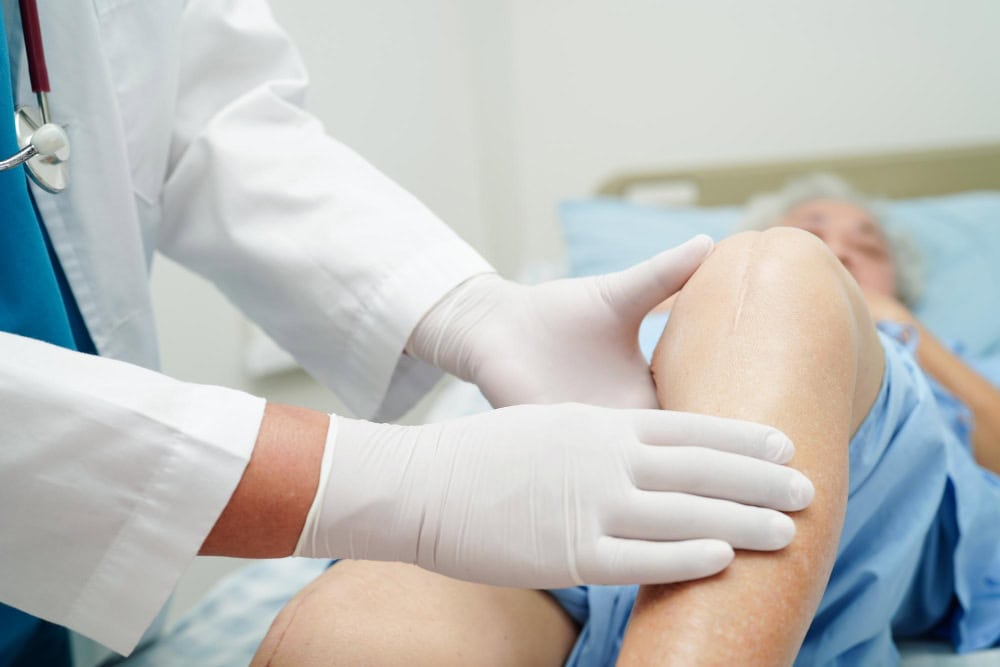
Unicondylar Knee Replacement (UKA), also known as partial knee replacement, is an advanced surgical procedure for patients with arthritis limited to one knee compartment. Compared to total knee replacement, UKA involves a smaller incision, preserves healthy joint structures, and offers a faster recovery timeline. With modern techniques and expert care from specialists like Dr. Yogesh K, patients can experience long-lasting relief and improved mobility. The procedure is especially suited for eligible candidates seeking effective results with minimal downtime.
Table of Contents
- Introduction
- What Is Unicondylar Knee Replacement?
- Who Is an Ideal Candidate?
- Procedure Overview
- Benefits of Unicondylar Knee Replacement
- Recovery After Surgery
- Risks & Complications
- Why Choose Dr. Yogesh K?
- The Takeaway
Introduction
Unicondylar knee replacement, or partial knee replacement, is a minimally invasive procedure that replaces only the damaged compartment of the knee joint—without altering the healthy bone, ligaments, or cartilage in the remaining compartments.
It is particularly effective for patients with early-stage osteoarthritis restricted to a single area of the knee. With shorter recovery times and natural knee movement, UKA has become a preferred alternative to total knee replacement in suitable cases.
Orthopaedic experts like Dr. Yogesh K, a leading knee replacement surgeon in Bangalore, often recommend this approach for patients who meet the clinical criteria and want to resume active living with reduced surgical burden.
What Is Unicondylar Knee Replacement?
Unicondylar Knee Replacement (UKA) is a form of knee arthroplasty where only one of the three compartments of the knee (medial, lateral, or patellofemoral) is resurfaced using a prosthetic implant.
Unlike Total Knee Replacement (TKR), which replaces the entire knee joint, UKA preserves the healthy portions of the joint—leading to more natural knee movement post-surgery.
Comparison: UKA vs. TKR
| Aspect | Unicondylar Knee Replacement | Total Knee Replacement |
| Treated Area | One compartment only | All three compartments |
| Invasiveness | Minimally invasive | More extensive |
| Incision Size | ~7–10 cm | Larger |
| Surgery Duration | 1–2 hours | 1.5–3 hours |
| Recovery Timeline | 4–6 weeks (typical) | 8–12 weeks |
Who Is an Ideal Candidate?
UKA is most effective when the joint damage is localized and the rest of the knee is structurally sound.
Patients may be eligible if they have:
- Osteoarthritis limited to a single knee compartment
- Good ligament stability
- Proper knee alignment
- Healthy bone quality
- Normal or controlled blood pressure, blood sugar, and BMI
- No history of major knee trauma or complex surgeries
Dr. Yogesh K, who performs unicondylar knee replacement in Whitefield, evaluates each patient with detailed clinical exams and imaging to determine candidacy.
Procedure Overview
Pre-Surgical Evaluation
Patients undergo a thorough clinical assessment, including:
- Physical examination
- X-rays or MRI scans
- Bloodwork and cardiac fitness clearance
- Review of medical history and medications
This helps ensure safety and suitability for UKA.
Surgical Steps
The surgery is performed under spinal or general anaesthesia and typically takes 1–2 hours:
- Anaesthesia – to ensure comfort during the procedure
- Incision – a small ~7–10 cm cut is made on the front of the knee
- Bone Preparation – damaged cartilage and bone are removed
- Trial Components – inserted temporarily to assess joint balance and stability
- Implantation – final prosthetic components are placed and fixed
- Closure – soft tissues are realigned and the incision is closed
Benefits of Unicondylar Knee Replacement
Unicondylar knee replacement offers multiple benefits, especially for active or older adults looking for a less invasive alternative to full joint replacement:
- Smaller incision and quicker healing
- Shorter hospital stay (often 1 day)
- Faster return to walking and daily activities
- Less blood loss and reduced post-operative pain
- Preservation of healthy joint structures
- More natural knee movement due to partial joint preservation
Under the care of certified surgeons like Dr. Yogesh K, many patients resume light physical activity within 2–3 weeks and full recovery within 3–6 months.
Recovery After Surgery
Recovery varies depending on age, health, and physiotherapy compliance. Here’s a general outline:
Hospital Stay
- Most patients are discharged within 24–48 hours
- Early mobilisation is encouraged on Day 1 with physiotherapist support
Rehabilitation Timeline
- Week 1: Walking with walker/crutches
- Week 2: Transition to cane or unaided walking; begin range-of-motion exercises
- Weeks 4–6: Return to basic daily activities
- 3–6 Months: Improved joint strength, flexibility, and endurance
- 6–12 Months: Full recovery in most cases
Activities Encouraged
- Walking, gentle cycling, swimming
- Avoid deep squats or high-impact sports until cleared by your surgeon
Risks & Complications
While UKA is generally safe and effective, like any surgery, it carries potential risks:
- Infection – requires antibiotics or in rare cases, surgical revision
- Blood Clots (DVT) – preventable with early movement and medication
- Implant Loosening or Wear – prosthetics may last 15–20 years, but wear depends on activity level and body mechanics
- Progression of Arthritis – may affect other compartments, requiring future intervention
Having your surgery performed by an experienced orthopaedic surgeon like Dr. Yogesh K significantly reduces these risks.
Why Choose Dr. Yogesh K?
With over 13 years of surgical experience and 10,000+ procedures performed, Dr. Yogesh K is recognised as one of the best knee replacement surgeons in Bangalore. He is a fellowship-trained specialist in arthroscopy, sports medicine, trauma, and robot-assisted joint replacement.
His expertise includes:
- Robotic Total Knee Replacement
- Unicondylar Knee Replacement in Whitefield
- Shoulder and wrist arthroscopy
- ACL and ligament reconstruction
- Sports injury rehabilitation
Dr. Yogesh’s approach is grounded in:
- Accurate diagnosis through imaging and physical assessment
- Minimally invasive techniques for quicker recovery
- Patient education and transparent care
- Advanced surgical tools, including robotic platforms
Patients appreciate his detailed explanation, ethical care, and consistent post-op follow-up support.
Conclusion
Unicondylar Knee Replacement is a proven and reliable option for patients with localised arthritis who want to avoid a full joint replacement. With the right surgical planning, physiotherapy, and follow-up, most patients can return to their daily routines with improved mobility and less pain.
If you’re considering knee surgery and want expert guidance, Dr. Yogesh K offers comprehensive consultations and advanced surgical care in Whitefield, Bangalore. His success with unicondylar and robotic knee replacement surgeries makes him a trusted name in modern orthopaedic care.
Book your consultation today and take the first step toward pain-free movement and long-term joint health.